The DevOps tools market is not fully mapped
Here is a question nobody asks out loud at a client kickoff: “Which of the 300+ DevOps tools we collectively know should we actually use here?” Everyone in the room has their favourites, everyone has a scar from a bad tool choice, and somehow the project ends up duct-taped together with four CI platforms, two container registries, and a homemade bash script that “only Dave understands.”
This framework gives freelance cloud DevOps engineers a sharp, opinionated way to understand which tools actually move the needle in 2026 and which ones are just resume furniture. It focuses on what truly matters in real-world systems, not just what tools do, but where they fit and why they matter.
Many teams only realise the impact of poor tool decisions as their systems scale, and inefficiencies start compounding over time, something that becomes clearer when you look at common cloud engineering mistakes.
Why the tools category is exploding - and why that creates a problem
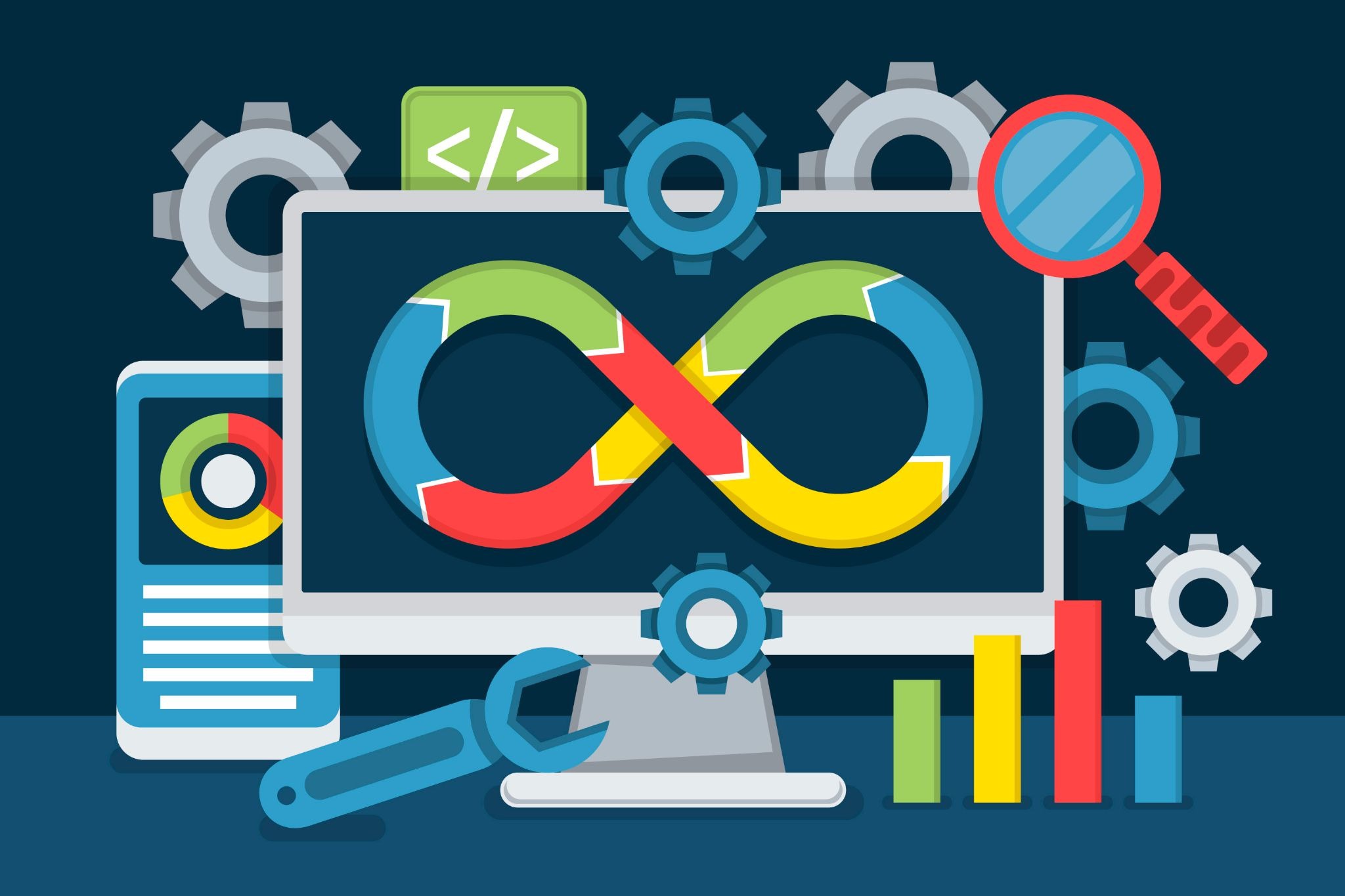
The DevOps tools market is not one market. It is eight overlapping sub-markets: CI/CD, containerization, orchestration, IaC, observability, security scanning, secrets management, and config management, each growing at its own pace, each with its own set of dominant vendors, and each capable of solving the same underlying problem in three different ways.
The global DevOps market itself continues to expand rapidly, projected to reach $20.53 billion by 2026 at a CAGR of over 23%. This growth is being driven by the increasing need to bridge development and operations in faster, more complex software environments.
At the same time, cloud adoption patterns are changing the nature of this growth. 73% of organisations now operate hybrid cloud environments, and multi-cloud usage continues to rise year over year. This means teams are no longer working within a single infrastructure model; they are operating across multiple systems simultaneously.
What this growth masks is not just expansion, but fragmentation. The problem is no longer the lack of tools. It is the lack of cohesion between them. As environments grow more complex, the number of tools increases, but the ability to manage them as a system does not always keep up.
Eight tool categories, one delivery system
Every DevOps tool fits into a specific stage of the pipeline. When you understand which stage a tool belongs to and which stages are already covered, it becomes much easier to review and fix a toolchain. This clarity helps you quickly assess a system and identify gaps without getting lost in too many tools.
.png)
The stages from Code to Deploy receive the highest tool investment and are where most freelance engagements are focused. The sections below explore each major tool category based on its relevance in the market and its practical value in real-world projects.
Tool category 1: CI/CD Platforms
CI/CD is the spine of the entire DevOps toolchain. Everything else, security scanning, IaC, container deployment, plugs into it.
As organisations push toward faster release cycles and continuous delivery, CI/CD adoption continues to grow as a core part of DevOps transformation initiatives. The demand here is not just for automation, but for reliability and repeatability in software delivery.
CI/CD today is less about tooling choice and more about workflow design. The best-performing systems are not the ones with the most tools, but those with clearly defined, easy-to-maintain pipelines and tight integration with the rest of the system.
Common tools used in this category include widely adopted CI/CD platforms that support automation and continuous delivery:
- Jenkins - Open-source automation server widely used in legacy and enterprise CI/CD pipelines.
- GitHub Actions - Native CI/CD solution integrated with GitHub for seamless workflow automation.
- GitLab CI/CD - Built-in pipeline system within GitLab offering end-to-end DevOps capabilities.
- Azure DevOps Pipelines - Microsoft’s CI/CD service designed for Azure-based and enterprise environments.
- CircleCI - Cloud-based CI/CD platform focused on speed, scalability, and developer productivity.
Tool category 2: Containerization
Containerization is the packaging layer that enables consistent software delivery.
But what makes it essential in 2026 is not just portability; it is alignment with cloud adoption. 63% of SMB workloads and 54% of enterprise workloads now run in public cloud environments, making containerization a foundational requirement rather than an optional improvement (Flexera State of the Cloud Report).
As systems move toward microservices and distributed architectures, containers provide the consistency needed to ensure applications behave the same across environments. They are no longer a tool choice; they are a baseline assumption in modern development workflows.
Common tools used in this category include:
- Docker -The most widely used container platform for building, packaging, and running applications consistently across environments.
- Podman - A daemonless container engine that provides a secure and lightweight alternative to Docker.
- containerd - A core container runtime responsible for managing container lifecycle operations.
- CRI-O - A Kubernetes-native container runtime designed specifically for running containers in orchestration environments.
Tool category 3: Infrastructure as Code (IaC)
Infrastructure as Code is the practice of managing infrastructure through machine-readable configuration files instead of manual processes. It is the difference between infrastructure that is reproducible and infrastructure that "only Dave understands."
The role of IaC is expanding beyond provisioning. Organisations are now integrating cost and planning considerations earlier in the lifecycle. 43% of organisations evaluate cloud costs before migration, indicating a shift toward proactive infrastructure decision-making.
This reflects a broader change in how infrastructure is treated. It is no longer just an operational layer. It is part of strategic planning, financial control, and system design.
Common tools used in this category include:
- Terraform - Widely used IaC tool for provisioning infrastructure across multiple cloud platforms.
- OpenTofu - Open-source alternative to Terraform with similar functionality and compatibility.
- Pulumi - Allows infrastructure to be defined using programming languages like Python, TypeScript, and Go.
- AWS CloudFormation - Native AWS service for managing infrastructure through templates.
- Azure Resource Manager (ARM) - Microsoft’s IaC framework for deploying and managing Azure resources.
.png)
Tool category 4: Observability
Observability tools are what tell you whether the pipeline you built is actually working in production. Without observability, you are not operating software; you are guessing.
In modern cloud environments, this has become even more critical. As systems grow more complex and distributed across multiple environments, managing performance, cost, and reliability becomes significantly harder. This increasing complexity makes visibility into system behaviour essential, and observability plays a critical role in operating modern infrastructure effectively.
Observability is no longer just about monitoring uptime. It is about understanding performance, cost behaviour, and system health across complex environments. Without it, even well-built systems become difficult to manage at scale.
Common tools used in this category include:
- Datadog - Full-stack observability platform covering metrics, logs, traces, and security monitoring.
- Prometheus - Open-source monitoring tool designed for collecting and querying time-series metrics.
- Grafana - A visualisation platform used to create dashboards from metrics, logs, and multiple data sources.
- OpenTelemetry - Open-source standard for collecting and exporting telemetry data (logs, metrics, traces).
- New Relic - Cloud-based observability platform offering application performance monitoring and analytics.
Tool category 5: Security (DevSecOps)
Security is no longer a final step. It is part of the pipeline.
And the rise of AI is making this even more complex. According to IBM’s Cost of a Data Breach Report, organisations using AI and automation in security are able to detect and respond to threats more effectively, highlighting how critical integrated security systems have become in modern environments.
This changes how security tools are used. No external protection layers are added after development. Instead, they are embedded into the system and integrated across every stage of the pipeline.
Modern systems are dynamic and distributed. Code is deployed faster, infrastructure changes frequently, and systems span multiple environments. In such setups, vulnerabilities can emerge at any stage of the lifecycle.
Security, therefore, evolves in two directions:
- Earlier in the pipeline, through code and dependency scanning
- Later in the lifecycle, through runtime monitoring and anomaly detection
The challenge most teams face is not the lack of tools but the lack of integration. Multiple tools generate alerts, but without a unified system, they create confusion rather than clarity.
The real shift is this: security is no longer about adding tools. It is about designing systems where security is built in.
Common tools used in this category include:
- Snyk - Developer-first security platform for scanning dependencies, containers, and code vulnerabilities.
- Trivy - Open-source security scanner for containers, filesystems, and IaC configurations.
- Checkov - Static analysis tool for detecting misconfigurations in infrastructure as code.
- Aqua Security - Platform focused on container and cloud-native application security.
- Falco - Runtime security tool for detecting abnormal behaviour in containerised environments.

Tool category 6: Configuration Management
Configuration management ensures systems remain consistent, repeatable, and scalable.
But in modern environments, its role is shifting. With hybrid cloud adoption increasing and workloads distributed across environments, configuration is no longer static. It is dynamic and continuously evolving.
Organisations are now managing multiple environments simultaneously, each with its own dependencies and configurations. Even small inconsistencies can lead to deployment failures or unpredictable behaviour.
This is why centralised governance is becoming essential. Many organisations are now adopting structured cloud governance models and platform teams to maintain consistency and control across environments, a shift widely observed across modern cloud practices (Google Cloud Architecture Framework).
Configuration is no longer a one-time setup task. It is an ongoing system control mechanism that directly impacts reliability and scalability.
Common tools used in this category include:
- Ansible - Agentless configuration management tool used for automating system setup and deployment tasks.
- Chef - Configuration management platform focused on infrastructure automation using code-based recipes.
- Puppet - Declarative configuration management tool for managing system state across large environments.
- SaltStack - Event-driven automation tool used for configuration management and infrastructure control.
- AWS Systems Manager - AWS-native service for managing and automating configuration across cloud resources.
Tool category 7: Secrets Management
Secrets management is one of the most underinvested areas in most client toolchains and one of the most consequential.
Because the real problem is not access. It is visibility.
In many organisations, visibility gaps still exist. 8% of organisations do not track SaaS usage or spending, indicating broader challenges in monitoring and control. These gaps often extend to how secrets are managed.
Secrets such as API keys, credentials, and tokens are present across every system layer. In many cases, they are still handled manually or stored insecurely, creating hidden risks.
Unlike other failures, issues with secrets often remain undetected until a security incident occurs. This makes them one of the most critical yet overlooked areas in DevOps systems.
Modern secrets management focuses on:
- controlling access
- rotating credentials
- tracking usage
It is no longer just about storage. It is about lifecycle management and visibility.
Common tools used in this category include:
- HashiCorp Vault - Centralised secrets management system with dynamic secrets, access control, and audit logging.
- AWS Secrets Manager - AWS-native service for securely storing, rotating, and managing application secrets.
- Azure Key Vault - Microsoft’s service for managing secrets, keys, and certificates across Azure environments.
- Google Secret Manager - GCP service for secure storage and access control of secrets.
- Doppler - Developer-focused secrets management platform for centralised and environment-based configuration.

Choosing the right tools: corporate vs. freelance engagements
The Tool Selection Conversation Is Different in Each Context
The "Handoff" factor remains critical. Tools must be understandable and maintainable by the client’s internal team. A system that only works in your presence is not a successful implementation; it becomes a dependency. The goal is not just to build a working setup, but to ensure it can be operated, extended, and easily troubleshooted by the team after handover.
This directly affects tool selection. For example, choosing GitHub Actions or GitLab CI/CD over highly customised Jenkins setups often makes pipelines easier to understand and maintain. Similarly, using Ansible for configuration or Terraform modules with a clear structure improves readability and reduces long-term dependency on the original engineer.
Default to Managed Services:
79% of Kubernetes users rely on managed services, highlighting a clear shift toward reducing operational overhead and focusing on application-level outcomes rather than infrastructure management. Managed platforms such as Amazon EKS, Azure AKS, and Google GKE remove the burden of cluster maintenance, upgrades, and scaling, allowing teams to focus on delivering value instead of managing systems.
This also impacts related tool choices. Instead of managing infrastructure-heavy setups, teams often combine managed Kubernetes with tools like Helm for deployment, Prometheus + Grafana for observability, and native cloud services for networking and scaling. This reduces complexity while maintaining flexibility.
This distinction becomes even more important when comparing corporate and freelance environments. In enterprise settings, tool choices are often influenced by existing ecosystems, compliance requirements, and long-term scalability, for example, Azure DevOps in Microsoft environments or Terraform for multi-cloud standardisation.
In freelance or project-based engagements, simplicity, speed of setup, and ease of handoff matter more. Tools like Docker Compose, GitHub Actions, and managed databases/services are often preferred because they are quick to set up and easy for teams to manage. The best solution is not the most powerful one; it’s the one the client can realistically manage.
What tools do you know are worth
Tool expertise is not uniformly valued. What matters is the ability to deliver outcomes.
This is reflected in how organisations measure success. 64% now evaluate cloud initiatives based on business value delivered rather than just cost savings.
This shift directly changes how tools are valued in the market. Engineers are no longer rewarded for knowing many tools at a surface level, but for using the right tools to solve real problems effectively.
For example, expertise in tools like Kubernetes, Terraform, and DevSecOps platforms such as Snyk or Trivy is often valued higher because they directly impact scalability, infrastructure reliability, and security. Similarly, strong knowledge of CI/CD platforms like GitHub Actions or GitLab CI/CD becomes valuable when it leads to faster and more reliable deployments, not just pipeline creation.
On the other hand, simply knowing multiple tools without understanding how they fit into a system does not create the same value. The difference lies in how tools are applied, whether they reduce complexity, improve performance, and deliver measurable outcomes.
This means engineers are increasingly valued not for the number of tools they know, but for how effectively they use those tools to solve real problems and drive meaningful results.
The horizon
Tool categories that will define 2027–2030
The next wave of DevOps evolution is already visible.
58% of organisations are already using GenAI in cloud environments, showing how quickly AI is becoming part of engineering workflows.
At the same time:
29% of cloud spend is estimated to be wasted
This combination of increasing automation and rising costs is shaping the future of DevOps. The focus is shifting toward integrating AI, cost optimisation, and system design into a cohesive workflow, a trend also reflected in broader industry research on AI adoption and its impact on technology operations (McKinsey State of AI Report).
This shift is also influencing the types of tools that will become more important in the coming years. AI-powered tools for monitoring, incident detection, and pipeline optimisation are gaining traction, helping teams identify issues faster and automate decision-making. At the same time, FinOps and cost visibility tools are becoming critical as organisations try to control cloud spending more effectively.
We are also seeing growth in platform engineering tools that standardise infrastructure and provide internal developer platforms, making it easier for teams to build and deploy without managing underlying complexity. Tools that combine observability, automation, and cost insights into a single system are likely to define the next generation of DevOps workflows.
The future is not about adding more tools. It is about integrating smarter systems that balance speed, cost, and reliability.
Conclusion
The DevOps tools market is growing rapidly. But the real challenge is not tool availability; it is system complexity. Hybrid cloud, AI adoption, and rising costs are pushing organisations toward a new realisation: tools alone are not enough.
The engineers who create the most value are not the ones who know the most tools. They are the ones who understand how to connect them into systems that actually work.
In both enterprise and freelance environments, the goal is the same reduce complexity, improve clarity, and design systems that scale.
The real advantage is not in building more, but in building with intention, knowing what to simplify, what to remove, and what truly matters.
In 2026, your most valuable skill as a freelance cloud DevOps engineer is not what you can build. It is knowing what not to build and designing systems that don’t rely on unnecessary tools to succeed.